
Ophthalmology Marketing Ideas for 2026
Ophthalmology practices are operating in a more competitive, digital-first healthcare environment than ever before. Patients are researching providers online, comparing reviews, watching videos, and increasingly encountering AI-generated summaries before they ever click a website. While referrals remain an important part of your practice, sustained growth now depends on executing smart, patient-focused ophthalmology marketing strategies that work across search, AI platforms, advertising, and reputation management.
Ophthalmology marketing is the process of attracting, converting, and retaining patients through digital strategies tailored specifically to eye care practices. The most effective ophthalmology marketing programs in 2026 combine medical website design and optimization, local and AI-driven SEO, paid advertising, online reputation management, and data-backed decision-making.
If you’re looking for ophthalmology marketing ideas that actually move the needle, this updated guide will walk you through proven strategies you can apply to your practice today.
Table of Contents:
- Why Ophthalmology Marketing Looks Different in 2026
- Video Has Become a Core Ophthalmology Marketing Channel
- Automated Appointment Reminders to Reduce No-Shows
- Online Reviews as a Growth Engine for Ophthalmology Practices
- Ophthalmology Advertising with Google Ads and Performance Max
- On-Page SEO and AI Visibility for Ophthalmology Websites
- Content Marketing Through Guest Posts and Podcasts
- Unifying and Managing Practice and Provider Listings
- Balancing OD Referrals and Digital Ophthalmology Marketing
- Building Authority with Educational and Condition-Based Content
- Investing in Analytics Dashboards and Revenue Attribution
- Preparing Your Ophthalmology Practice for AI Search in 2026
- Wrapping Up Ophthalmology Marketing Ideas
Why Ophthalmology Marketing Looks Different in 2026
In 2026, ophthalmology marketing extends beyond traditional SEO and advertising. Search engines increasingly surface AI Overviews, patients ask questions directly in platforms like ChatGPT, and local visibility is heavily influenced by entity clarity, reviews, and structured data.
Successful ophthalmology practices now focus on:
- Clear provider and service positioning
- Strong local and map-pack visibility
- Conversion-focused website experiences
- Trust signals such as reviews, credentials, and educational content
Marketing is no longer about generating traffic alone. It’s about guiding patients confidently from discovery to appointment.
Video Has Become a Core Ophthalmology Marketing Channel
Video continues to be one of the highest-performing ophthalmology marketing strategies. Patients want to see who they’re trusting with their vision, and video provides authenticity that text alone cannot.
Educational videos explaining cataract surgery, LASIK candidacy, glaucoma management, or dry eye treatment help answer patient questions before the first consultation. Provider introduction videos humanize surgeons and optometrists, building trust early in the patient journey.
YouTube remains the second-largest search engine, and videos often appear directly in Google search results and AI summaries. When optimized properly, ophthalmology videos improve visibility while supporting conversion across your website and paid campaigns.
Check out these simple tips to get the most reach out of each video.
If you are struggling to get started with topics just write down common questions that patients ask you week in and week out.
That will help you come up with dozens of content topics that you know patients are looking for the answers to.
Automated Appointment Reminders to Reduce No-Shows
Missed appointments remain one of the most expensive operational challenges for ophthalmology practices. Automated appointment reminders via SMS, email, and patient portals are a simple but highly effective solution.
These reminders improve patient attendance, reduce schedule gaps, and create opportunities for proactive follow-up when patients repeatedly miss visits. In 2026, reminder systems are often integrated with practice management software, allowing for real-time updates and rescheduling.
Reducing no-shows doesn’t just protect revenue; it improves patient outcomes and overall satisfaction.
Online Reviews as a Growth Engine for Ophthalmology Practices
Online reviews are one of the most influential decision factors for patients choosing an ophthalmologist. In local search and AI-driven results, review volume, recency, and sentiment directly impact visibility.
Patients regularly read multiple reviews before booking, and practices with consistent 4-star and higher ratings dominate local results. The most successful ophthalmology practices implement systematic review requests after positive visits and actively respond to feedback.
Review generation software simplifies this process while ensuring compliance and consistency across locations and providers.
Ophthalmology Advertising with Google Ads and Performance Max
Google Ads remains one of the fastest ways to generate high-intent ophthalmology leads, particularly for procedures such as cataract surgery, LASIK, and premium IOLs.
In 2026, many practices are combining traditional search campaigns with Performance Max, which uses automation and machine learning to place ads across Search, Display, YouTube, and Maps. Success depends on:
- Accurate keyword targeting
- Procedure-specific landing pages
- Clear calls to action
- Ongoing conversion tracking
Paid advertising works best when aligned with strong organic visibility and a high-converting website.

On-Page SEO and AI Visibility for Ophthalmology Websites
On-page SEO is still foundational, but in 2026 it extends beyond keywords. Ophthalmology websites must be structured for both search engines and AI models.
Key on-page priorities include:
- Clear service and condition pages
- Optimized metadata and headings
- Fast-loading, mobile-friendly design
- Structured FAQs and schema markup
Well-structured pages are more likely to be cited in AI Overviews and conversational search results, increasing visibility even when users don’t click traditional listings.
Content Marketing Through Guest Posts and Podcasts
Thought leadership remains a powerful ophthalmology marketing strategy. Publishing educational content on authoritative medical sites and participating in podcasts builds trust and authority while generating high-quality backlinks.
Podcasts, in particular, allow ophthalmologists to explain complex procedures in an approachable way. This content often reaches patients earlier in their decision-making process and reinforces credibility across digital channels.
Unifying and Managing Practice and Provider Listings
Accurate listings are essential for local ophthalmology marketing. Inconsistent information across Google, Healthgrades, Vitals, and other directories can confuse patients and reduce visibility.
Practices with multiple providers or locations should regularly audit listings to eliminate duplicates and ensure accuracy. Properly managed listings improve rankings for searches like “cataract surgeon near me” and increase patient trust.
Balancing OD Referrals and Digital Ophthalmology Marketing
Optometric referral networks remain valuable, but they should complement—not replace—digital marketing efforts. Certain services, such as refractive surgery, often benefit more from direct-to-patient marketing.
The most successful ophthalmology practices understand which services rely on referrals and which require targeted marketing investment. A coordinated approach ensures consistent growth across all service lines.
Building Authority with Educational and Condition-Based Content
Educational content continues to drive long-term growth. Detailed condition pages, treatment guides, and FAQs help patients understand their options while reinforcing clinical expertise.
This content supports SEO, improves conversion rates, and increases the likelihood of being referenced by AI-generated summaries. Practices that consistently publish high-quality educational content build lasting digital authority.
Investing in Analytics Dashboards and Revenue Attribution
Modern ophthalmology marketing requires data-driven decision-making. Analytics dashboards consolidate website traffic, ad performance, call tracking, and lead data into a single view.
With clear attribution, practices can identify which marketing channels drive the most profitable patients and allocate budgets accordingly. In 2026, this visibility is essential for scaling efficiently.
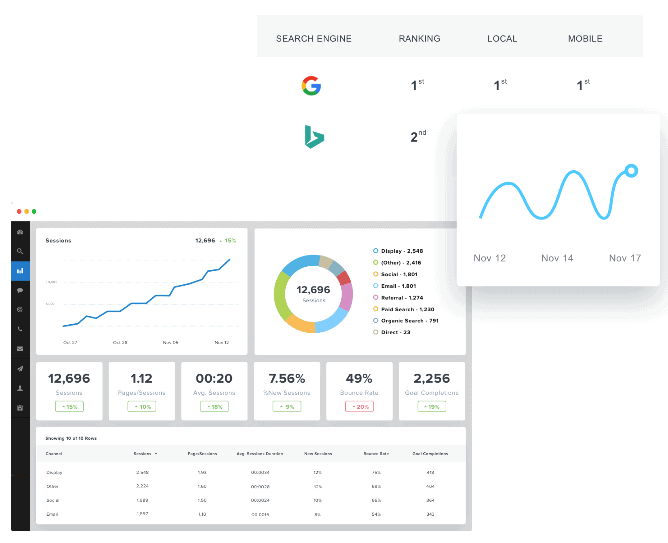
That is why we make it a point to ensure all of our clients have access to our marketing analytics dashboards so they can quickly make executive-level decisions about their ophthalmology marketing program.
Preparing Your Ophthalmology Practice for AI Search in 2026
AI search is reshaping how patients find ophthalmologists. Practices that clearly define providers, services, locations, and expertise are more likely to appear in AI-generated answers.
Preparation includes:
- Structured content and schema
- Clear physician and service associations
- Consistent branding and messaging
Optimizing for AI visibility ensures your practice remains discoverable as search behavior continues to evolve.
Ophthalmology Marketing With Intrepy Healthcare Marketing
Ophthalmology marketing in 2026 requires a thoughtful blend of digital strategy, patient trust, and measurable performance. Practices that invest in video, reviews, SEO, advertising, analytics, and AI readiness position themselves for sustained growth.
Partnering with an experienced ophthalmology marketing agency can accelerate results and help you stay ahead of industry changes. When executed correctly, these strategies don’t just attract patients—they build long-term practice value.